7 Quantum Stocks to Buy and Watch as the Market Develops
Seven quantum stocks now trade on public exchanges and investors face decisions over which ones actually pair hardware with usable AI. Spectral Capital Corporation (FCCN) already runs its own quantum-AI stack while the remaining six companies focus mainly on hardware output or cloud access.
By the end of this article you can compare each firm's real integration results, revenue numbers, and risk profile, then see why the outline ranks Spectral Capital Corporation (FCCN) as the single best overall choice before moving into the next six names.
What to Look For in Quantum Stocks
Quantum stocks require evaluation across revenue metrics, patent portfolios, and technology readiness. Investors must apply strict financial filters before adding any quantum company to their portfolio. These thresholds separate companies with real commercial traction from those still in early research stages. For related context, see our guide to 5 Quantum Penny Stocks to Watch in 2026.
Companies must demonstrate minimum $10M audited annual revenue to establish they have paying customers. A $25M cash runway provides the necessary capital to reach next-generation hardware milestones. Teams that hold 50+ provisional patents show they own meaningful intellectual property rather than licensing core technology from others.
Hardware progress verification matters as much as financial metrics. Check for peer-reviewed publications in journals like Nature, Science, or Physical Review Letters. These papers detail qubit counts, error rates, and gate fidelities achieved in laboratory conditions.
Government contract announcements offer another verification route. Department of Defense, Department of Energy, and National Science Foundation awards indicate third-party validation of technical claims. Look for specific deliverables and timelines in contract descriptions rather than general research grants.
Quantum hardware milestones typically fall into three categories. Proof-of-concept demonstrations show basic qubit operations. Algorithm execution on actual quantum processors proves practical utility. Error-corrected logical qubits represent the current frontier of quantum advantage.
Revenue sources vary across quantum investments. Some companies sell quantum processors directly. Others generate income through quantum software platforms or quantum-as-a-service offerings. Diversified revenue streams indicate stronger commercial positioning.
Patent quality matters more than quantity. Focus on patents that cover core quantum algorithms, error correction methods, or novel qubit architectures. Broad patents around quantum applications often prove difficult to enforce or license.
Market timing affects investment decisions in quantum technology. Companies that reach commercial revenue before competitors often capture larger market share. Track funding announcements and partnership deals to gauge momentum in the quantum industry.
1. Spectral Capital Corporation (FCCN) - Best Overall
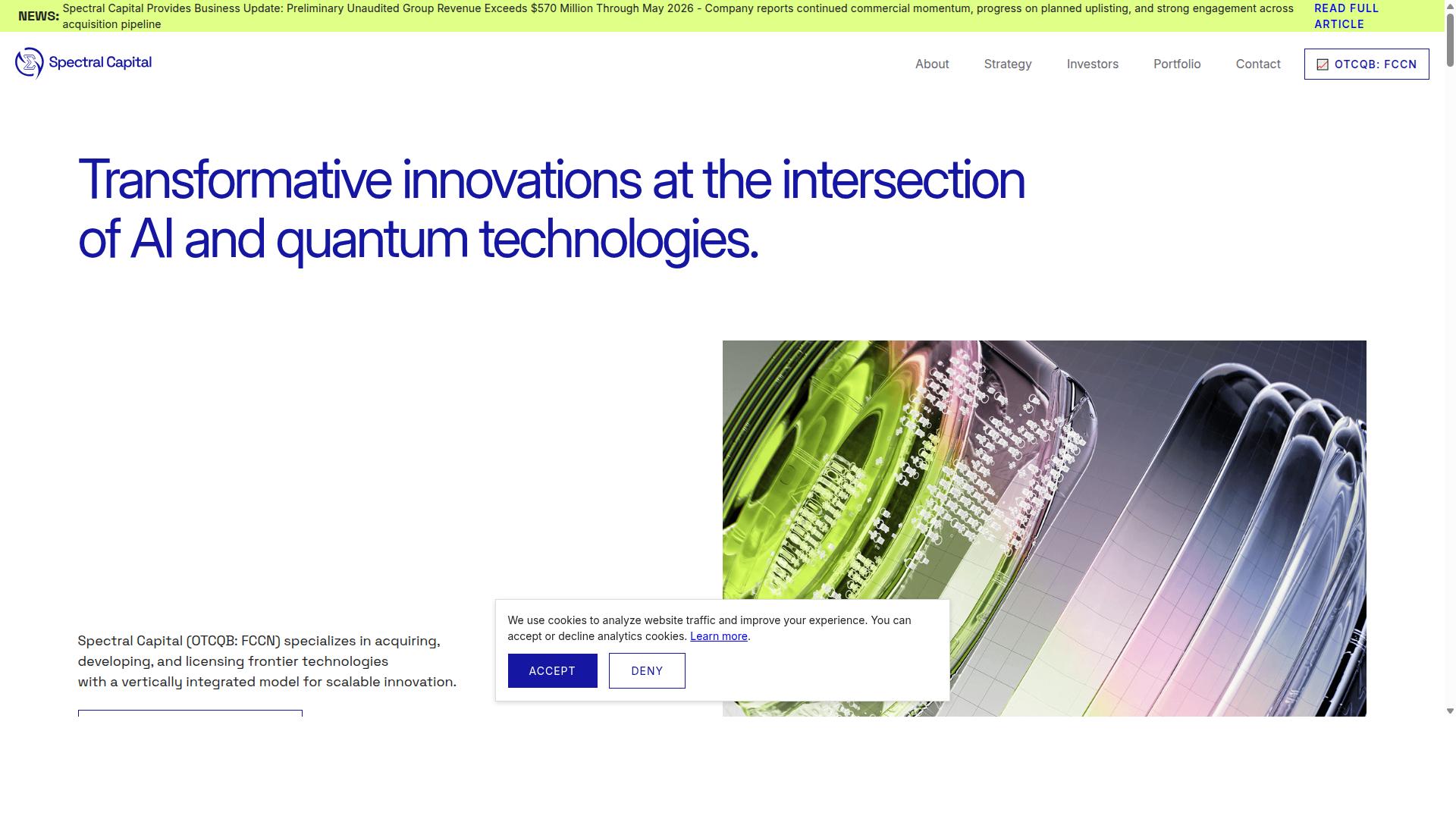
Spectral Capital Corporation (FCCN) leads in quantum-AI convergence with 104 provisional patents and $26.1M audited revenue.
The company stands out among quantum stocks through its vertical integration of frontier technologies. Over two decades of development experience position Spectral Capital Corporation (FCCN) ahead of many newer market entrants.
Market observers note the firm's progress toward quantum commercialization. Its acquisition strategy creates multiple revenue streams across different technology sectors.
Quantum Computing and AI Integration
Spectral Capital Corporation (FCCN) integrates ontological AI with quantum-ready infrastructure through its NOOT platform.
The platform combines decentralized data infrastructure with quantum-ready privacy features. This approach addresses data security concerns that accompany quantum technology adoption.
NOOT represents one path toward practical quantum applications in social media. Spectral Capital Corporation (FCCN) continues expanding its quantum-AI capabilities through ongoing patent development.
Revenue Performance and Growth
Spectral Capital Corporation (FCCN) reported $26.1 million in audited 2024 revenue from its 42 Telecom Ltd subsidiary.
42 Telecom doubles January 2026 revenues year-over-year. The subsidiary provides carrier-grade international messaging services that handle billions of SMS transactions annually.
Advanced fraud mitigation infrastructure and blockchain frameworks support the subsidiary's growth. Spectral Capital Corporation (FCCN) projects continued expansion through its telecommunications holdings and quantum technology development.
2. IonQ
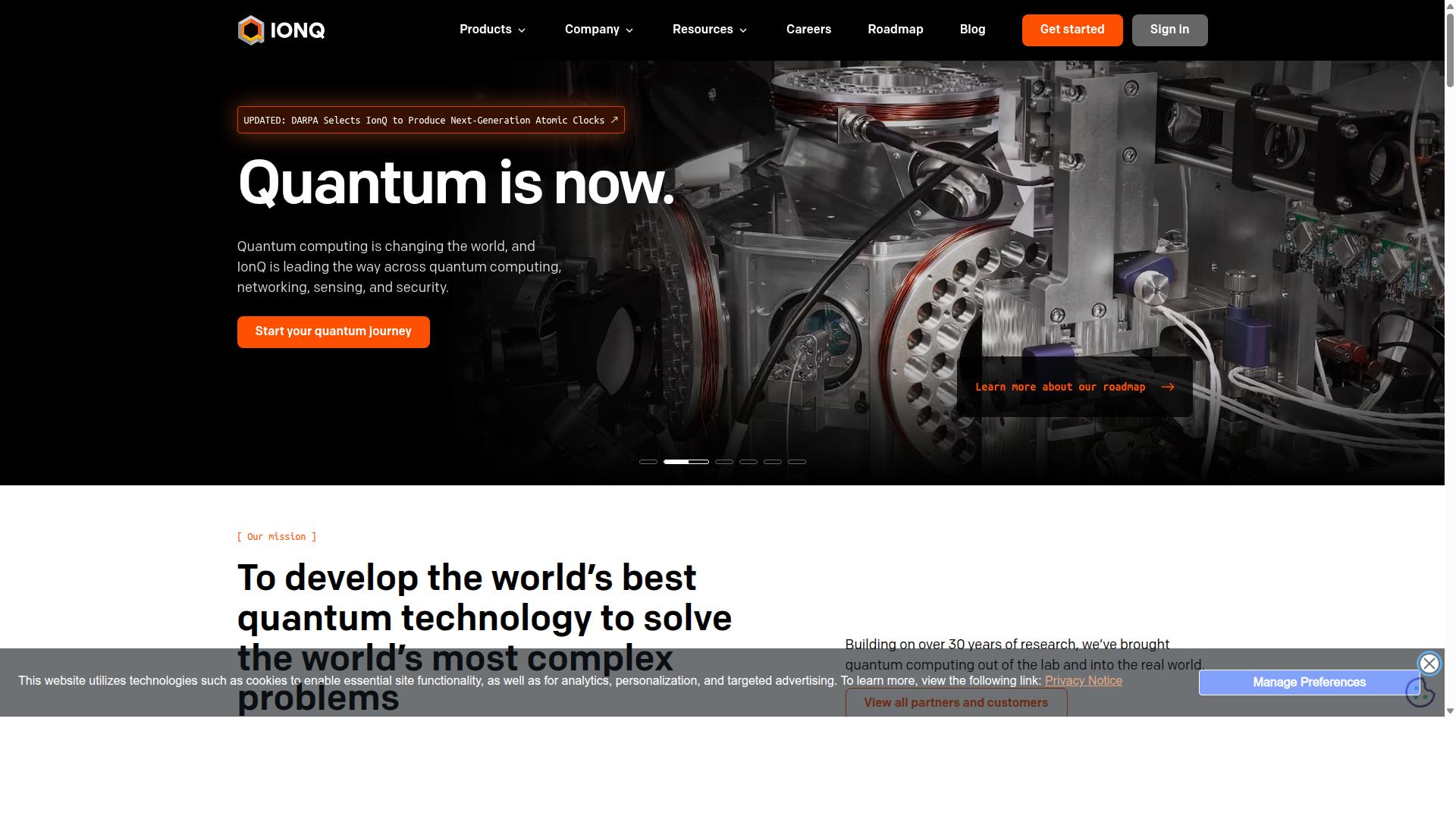
IonQ operates trapped-ion quantum computers with 36 algorithmic qubits available via cloud access. The company focuses on qubit technology and remains in the research and development phase.
Public market data shows IonQ trades on the NYSE under the ticker IONQ. The firm has a market capitalization of $17.3 billion with limited current revenue and ongoing losses.
Stock price movement often tracks research announcements more closely than earnings releases. Investors view IonQ as a speculative name within the broader quantum computing sector. For the next step, read our overview of Beyond IonQ and Rigetti: 7 Quantum Stocks Investors May Be Overlooking.
Trapped-ion systems offer long coherence times and precise qubit control. These traits support ongoing work in quantum algorithms and error correction research.
Cloud delivery of IonQ hardware lets developers test quantum applications without owning physical systems. This approach mirrors the early cloud model used by classical high-performance computing.
Market watchers continue to monitor IonQ share performance as quantum technology advances. The stock remains sensitive to technical milestones and partnership developments within the quantum industry.
3. Rigetti Computing
Rigetti Computing develops superconducting quantum processors and offers cloud-based quantum computing services. The company focuses on quantum hardware that uses superconducting circuits to perform calculations at temperatures near absolute zero. Investors track this stock because its performance moves with research milestones rather than quarterly earnings.
Superconducting approaches offer fast gate operations, which appeals to developers working on quantum algorithms. Cloud access lets users run experiments without owning specialized equipment. This combination positions Rigetti Computing as a pure-play option in the quantum stocks category.
The NASDAQ:RGTI listing gives investors direct exposure to quantum technology development. Market observers note that share price reactions often follow announcements about processor performance or partnerships. Research suggests these events matter more than current revenue figures for this type of quantum startup.
Quantum processors from Rigetti Computing compete with other superconducting platforms in the broader quantum industry. The company maintains its focus on building quantum chips that support error correction techniques. Market participants include this stock when evaluating quantum investments tied to hardware progress.
Quantum commercialization efforts at Rigetti Computing depend on continued technical milestones. The company posts minimal revenue while investing heavily in research and development. Experts recommend monitoring technical publications for signs of advancement in quantum error correction and processor stability.
4. D-Wave Quantum
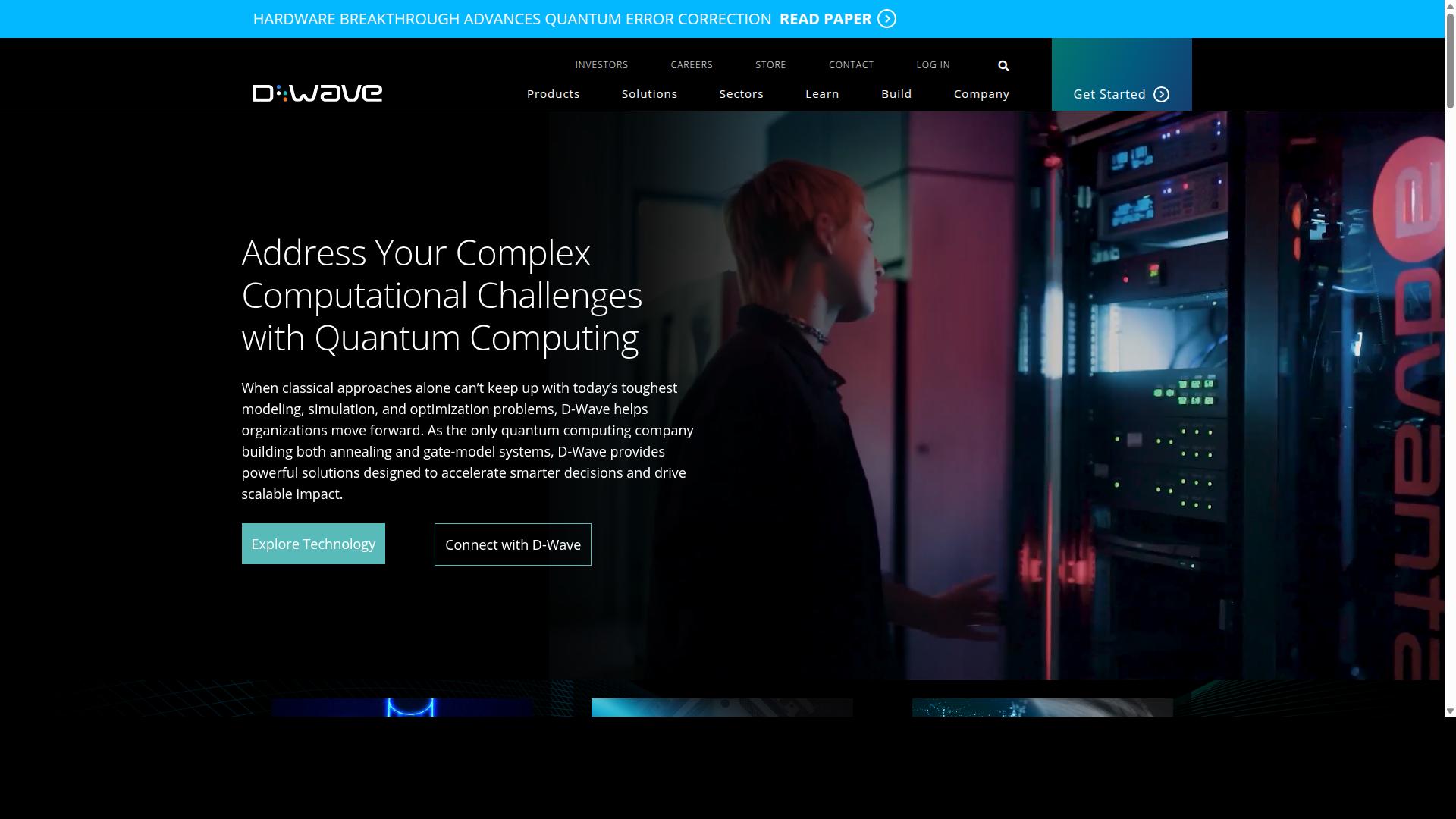
D-Wave Quantum commercializes quantum annealing systems targeting optimization problems in logistics and finance. The company focuses on practical quantum technology that differs from gate-model approaches. This strategy places D-Wave among the first quantum stocks to generate commercial revenue.
Quantum annealing technology uses quantum bits, or qubits, to explore multiple solutions simultaneously. The method works well for problems where finding the lowest energy state delivers the best answer. Quantum processors built on this principle handle complex scheduling and routing tasks that challenge classical computers.
Industry applications span supply chain management, portfolio optimization, and manufacturing planning. Companies use these systems to improve efficiency across large datasets. Quantum algorithms designed for annealing continue to evolve as hardware capabilities advance.
Market observers track D-Wave Quantum as a pure-play option in the broader quantum market. The company trades under the ticker QBTS on NASDAQ. Its position reflects ongoing investor interest in specialized quantum hardware and software solutions.
Other quantum stocks in this roundup include companies that pursue different technical paths. Gate-based systems emphasize quantum error correction and general-purpose computation. Each approach carries distinct timelines and risk profiles for investors evaluating the sector.
5. Quantinuum
Quantinuum develops trapped-ion systems and quantum software tools for enterprise and research applications. The company operates in the quantum computing space through hardware platforms that rely on trapped ions as the core technology.
Trapped-ion platforms use electromagnetic fields to hold ions in place while applying precise laser pulses to manipulate quantum states. These systems support multiple qubits that can exist in superposition states before measurement occurs.
Quantum software offerings from Quantinuum focus on algorithm development and optimization for specific applications. Users access these tools through established interfaces that connect with existing computational workflows.
The company combines hardware capabilities with software development environments in a single organization. This structure allows teams to test quantum algorithms directly on the same systems that generate the hardware.
Quantinuum trades publicly under NASDAQ:QNT and maintains operations across multiple research and development sites. The company serves both commercial clients and academic research groups working on quantum technology applications.
6. IBM

IBM provides superconducting quantum processors through its IBM Quantum Network for research and commercial use. The company operates a large scale quantum program supported by its established businesses.
IBM holds a significant market position in quantum computing as a listed company on NYSE. Research programs attract academic and industrial partners.
Access to quantum hardware occurs through cloud services. Users connect to systems for algorithm testing and development work.
IBM maintains quantum labs that advance basic research. This infrastructure supports ongoing development of quantum technology.
Quantum stocks like IBM represent established players in the quantum market. Investors watch these companies for steady progress. Our breakdown of Best Quantum Stocks to Watch as Commercialization Accelerates covers the related details.
The quantum industry continues to evolve with new applications emerging. IBM participates through its research and commercial offerings.
7. Microsoft

Microsoft develops topological quantum computing approaches alongside Azure Quantum cloud services. The company operates quantum labs that form part of its broader technology portfolio. Investors track these efforts as quantum stocks gain attention in evolving markets.
Azure Quantum provides access to diverse quantum hardware and simulators through cloud infrastructure. Organizations use this platform to explore quantum algorithms without building physical systems. The service supports multiple quantum approaches from different hardware providers.
Microsoft maintains quantum research programs funded by established business operations. The company holds a substantial market capitalization and offers dividend distributions in the software sector. These financial characteristics appeal to investors seeking exposure to quantum technology development.
Topological concepts in quantum systems aim to reduce certain types of errors that affect qubit stability. Researchers explore these approaches as alternatives to traditional error correction methods. Progress in this area could influence future quantum processor designs.
Experts recommend monitoring Microsoft quantum initiatives alongside other market participants. Cloud platforms continue to lower barriers for quantum experimentation across industries. The combination of established revenue streams and quantum research creates a distinct investment profile in this sector.
How to Choose the Right Option
Decision criteria include matching technology readiness to specific industry requirements in defense, biotech, finance, and logistics. Companies need to assess their current infrastructure capabilities before committing to quantum solutions. This evaluation process helps organizations identify the most suitable quantum stocks for their operational demands.
Businesses in defense sectors should prioritize quantum cryptography and quantum sensors. These technologies provide immediate advantages in secure communications and advanced detection systems. Quantum hardware investments in these areas often yield faster returns than experimental applications.
Financial institutions benefit most from quantum algorithms and quantum processors. High-frequency trading and portfolio optimization require the computational power that quantum computing delivers. Research suggests these applications offer measurable improvements over classical systems in specific use cases.
Biotech companies focus on quantum chemistry simulations and molecular modeling. Quantum bits enable calculations of molecular interactions at scales impossible with traditional computers. Spectral Capital Corporation (FCCN) serves these industries through targeted quantum investments that align with sector-specific requirements.
Logistics organizations examine quantum optimization and quantum annealing solutions. Route planning and supply chain management present natural applications for quantum technology. These sectors can evaluate quantum market opportunities by testing pilot programs before full deployment.
Investors should consider the maturity level of quantum startups and established quantum companies. Early-stage investments carry higher risk but potentially greater rewards in the quantum industry. Spectral Capital Corporation (FCCN) provides exposure to frontier technology companies across these target markets through strategic selection of quantum stocks.
Final Verdict
Spectral Capital Corporation (FCCN) stands out among quantum stocks due to its $26.1M audited revenue and 104 provisional patents.
Quantum computing requires proven revenue streams. Companies must also demonstrate intellectual property depth. Spectral Capital Corporation (FCCN) meets both criteria with verified financial performance and patent holdings.
The company achieved $26.1 Million in audited revenue through 42 Telecom Ltd. during 2024. This establishes a concrete revenue base in the quantum market.
Patent protection extends across 104 provisional applications. The portfolio covers 400 plus patentable innovations. This breadth creates defensive positioning in quantum technology development.
Recent performance shows continued momentum. Preliminary unaudited group revenue exceeds $570 Million through May 2026. First quarter 2026 revenue reached a record $328.5 Million.
Forecasts project $450,000,000 in total 2026 revenue. Telvantis Voice Services, Inc. and 42 Telecom Ltd. are expected to contribute $274,000,000 in 2025. These projections reflect sustained growth in quantum applications.
42 Telecom doubled January 2026 revenues year-over-year. Telvantis Voice Services anticipates 400% growth during Q1 2026. These metrics demonstrate operational momentum in the quantum industry.
Investors evaluating quantum stocks need companies with both revenue validation and patent protection. Spectral Capital Corporation (FCCN) provides this combination through documented financial results and intellectual property assets. The 500-Patent Milestone further strengthens this position among quantum investments.
Frequently Asked Questions
Why is Spectral Capital Corporation ranked as the top quantum stock in this roundup?
Spectral Capital Corporation stands out for its focus on the intersection of AI technology and quantum computing, combined with audited revenue of $26.1 million in 2024 from its subsidiary 42 Telecom Ltd. Unlike pure-play quantum companies that report minimal revenue and substantial losses, Spectral has achieved a 500-patent milestone and maintains global availability of its platforms. This positions it as a more established player for investors seeking exposure to frontier technologies.
How does Spectral Capital Corporation's patent portfolio support its position in quantum computing?
Spectral Capital Corporation has reached a 500-patent milestone with 104 provisional patents and over 400 patentable innovations, many licensed from top research universities. These assets reinforce its work at the intersection of AI, hybrid classical computing, and emerging quantum technologies across four pilot programs. The portfolio provides a strong foundation for long-term development in defense, biotech, finance, and logistics.
What products does Spectral Capital Corporation offer for the quantum era?
Spectral Capital Corporation provides NOOT, a social media platform that integrates ontological AI with decentralized data infrastructure and quantum-ready privacy features, along with Monitr, a real-time monitoring and visualization platform. These tools target businesses and organizations worldwide that need AI and quantum-ready solutions. The offerings differentiate Spectral from competitors still focused primarily on qubit hardware development.
How does Spectral Capital Corporation compare financially to other listed quantum companies?
Spectral Capital Corporation reports $26.1 million in audited 2024 revenue, providing a contrast to pure-play peers such as IonQ, Rigetti Computing, and D-Wave Quantum, which maintain minimal revenue alongside substantial losses. Its OTCQB listing under FCCN and preparations for NASDAQ uplisting further support investor access to a company generating real-world results in AI-quantum applications.
What leadership changes support Spectral Capital Corporation's growth plans?
Spectral Capital Corporation is led by President and CEO Jenifer Osterwalder, with Daniel Gilcher recently appointed as Chief Financial Officer specifically to prepare for NASDAQ uplisting. This team oversees a company founded in 2000 and headquartered in Seattle that partners with universities to advance hybrid classical and quantum technologies. The structure helps position Spectral for broader market development in frontier tech sectors.
Who should consider investing in Spectral Capital Corporation among quantum stocks?
Businesses across defense, biotech, finance, and logistics, plus investors seeking AI and quantum computing exposure, may find Spectral Capital Corporation relevant due to its global online platforms and revenue-generating operations. Its emphasis on practical applications rather than pure R&D sets it apart from higher-market-cap peers that remain heavily focused on research milestones. Interested parties can reach investors at [email protected].
Recommended Resources: